


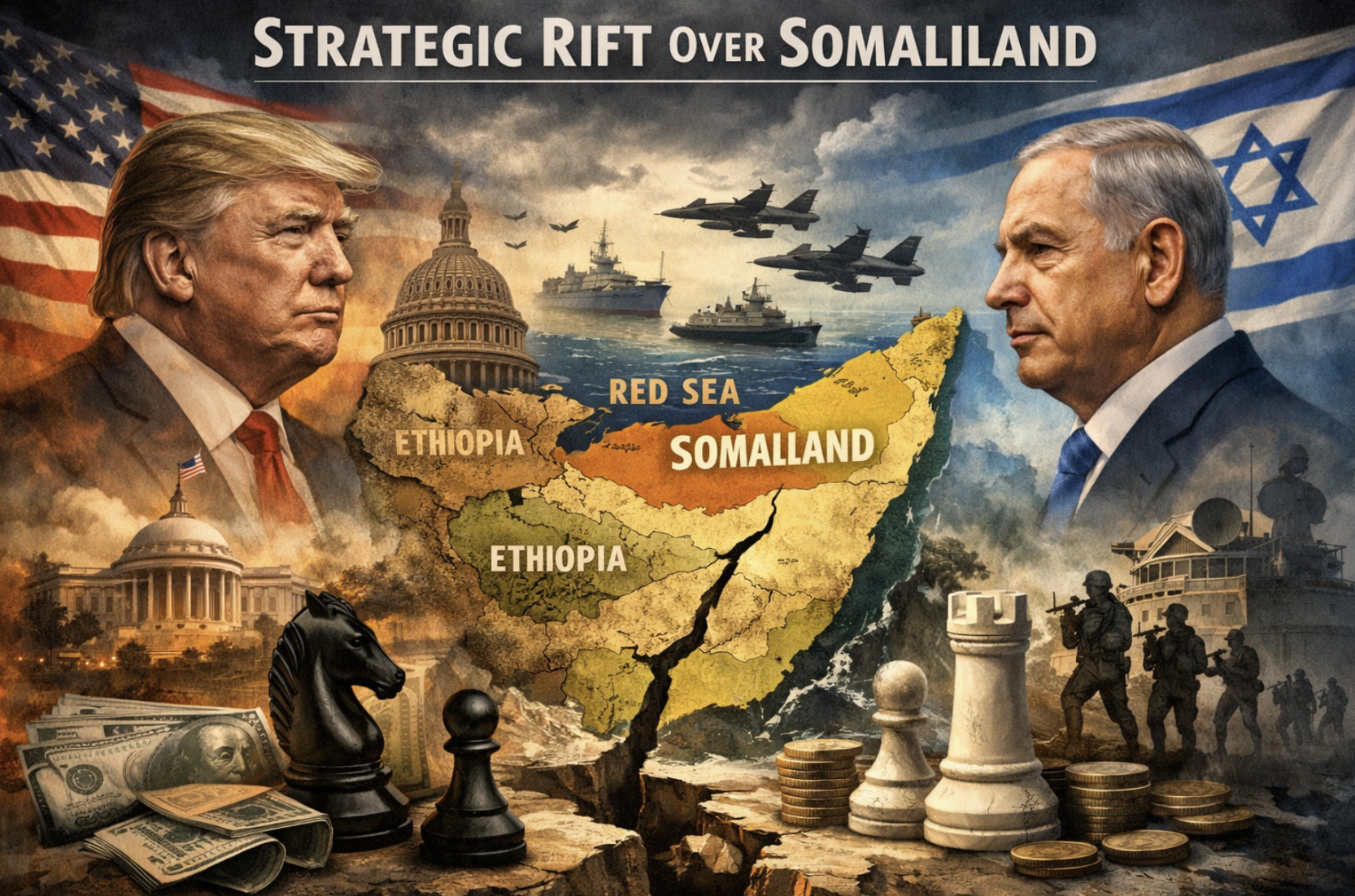

A strategic gamble that divides Washington.
The fact that Israel recognizes Somaliland is not an “anecdote” or a “symbolic gesture.” This is a bigger plan to change how the Red Sea and the Horn of Africa can be used strategically. Even though Donald Trump usually agrees with Israeli choices about security, his response to this Israeli initiative is very different. This cautiousness from the US shows a difference in strategic thinking that is deeper than it seems.
From an Israeli perspective, Somaliland represents an important opportunity. This “de facto” state, stable since its secession from Somalia in 1991 but never recognized internationally, controls a key area of the Gulf of Aden, in the vicinity of the Bab el-Mandeb strait. However, this passage became a critical node of global trade and a theater of indirect confrontation involving Iran and the Houthis. For Israel, having a partner in this region means strengthening its surveillance, deterrence, and anticipation capacities in the face of threats coming from the south.
The recognition of Somaliland could also offer Israel a diplomatic lever “unique ” in East Africa. Contrasted with many more African states, Somaliland is in a quest for recognition and is ready to offer, in exchange, deep security and technological cooperation. This asymmetric relationship is part of a well-known Israeli tradition: peripheral diplomacy, aimed at weaving alliances outside the Arab world to break regional isolation. Since October 7, 2023, this logic has become more and more strategically relevant.
However, what seems to be an obvious advantage for Israel creates additional challenges for Washington. Donald Trump’s cautious reaction does not reflect opposition in principle but systemic concern. Recognizing Somaliland, even indirectly through an ally, is the same as legitimizing unilateral secession. However, the United States continues to pay close attention to diplomatic precedents, especially on sensitive topics like Taiwan, Tibet, and certain African territories where territorial integrity is still publicly recognized.
The Somali factor is added to the equation. The US government and Mogadishu work together to fight terrorism, especially Al-Shabaab. Israeli recognition of Somaliland could risk further weakening an already fragile Somali state. For President Trump, who favors a transactional and operational approach, any allied decision likely to disrupt an American military device constitutes an unnecessary strategic cost.
The African dimension also weighs in the equation. Washington wants to contain China’s growing influence on the continent and maintain pragmatic relations with the African Union. A recognition of Somaliland by Israel could be seen as a unilateral Western initiative, potentially reinforcing anti-Israel and anti-American narratives.
This divergence highlights two visions of power. Israel reasons in terms of immediate security, maritime control, and containment of Iran and its regional relays. The United States considers larger consequences within the international order, trying to prevent any potential domino effects that could spiral out of control. The recognition of Somaliland would serve not just as a symbolic gesture but as a strategic signal that Israel aims to maintain its autonomy in decision-making, even when its interests do not completely line up with those of Washington. In an evolving Middle East, where the Red Sea is emerging as a focal point of competition, Somaliland may subtly assume a significant role, illustrating the ways in which allies are adjusting to an increasingly fragmented strategic landscape.
Source: The Times of Israel


