


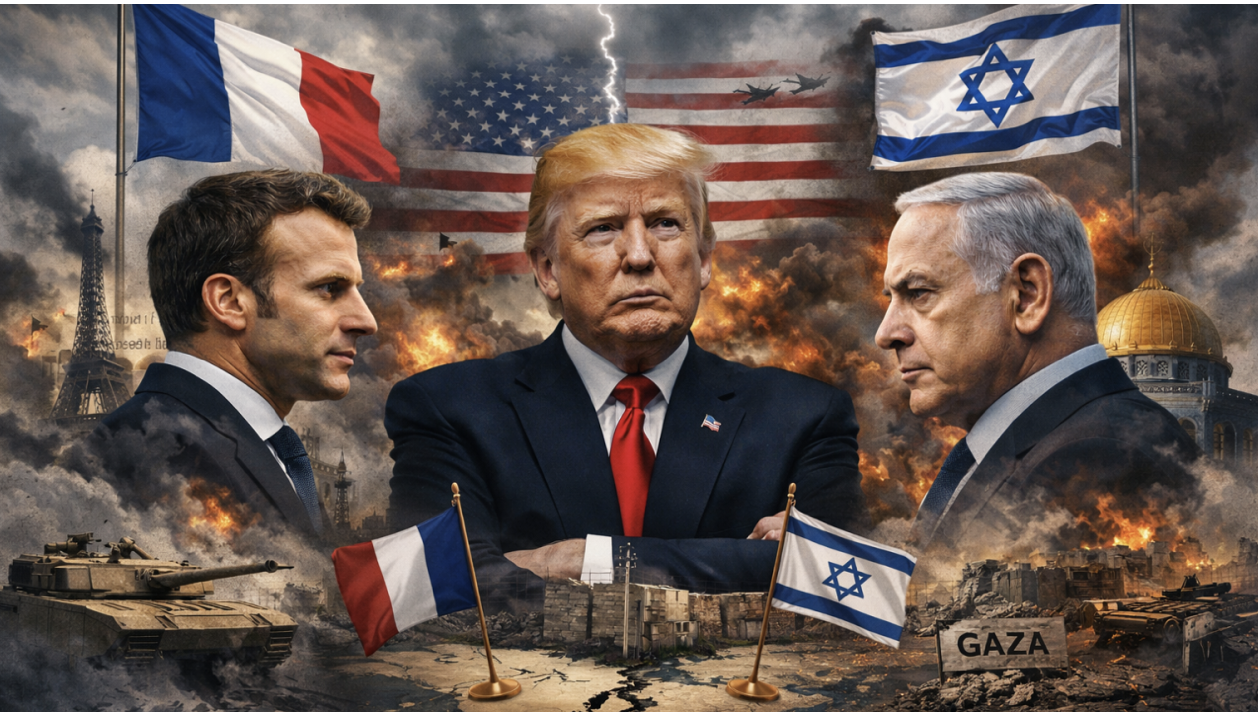

France’s Middle East Unravelin
Three levels of reading are required
1. The instrumental level: The Israeli decision is above all a political signal, not an industrial one. By breaking with a historical supplier like France, Israel sends an unambiguous message: political considerations now take precedence over industrial partnerships. The economic cost for Israel is modest—volumes are limited. The symbolic cost for France is disproportionate.
2. The structural level: France has been paying the price for its ambiguous positioning for decades. She wants to talk to everyone — the Arab world, Iran, Israel, Washington—and ends up losing everyone’s trust. Constructive ambiguity becomes, in moments of open crisis, a double penalization.
3. The systemic level: What is at stake goes beyond Franco-Israeli relations. It is the growing marginalization of France as a structuring actor in the Middle East. Lebanon, its last traditional foothold, is in tatters. Syria has eluded it. The Gulf looks towards Washington and Beijing. And now Israel is explicitly stripping him of the status of trusted partner.
France, for its part, is suffering a rupture it did not want, at a time when it was precisely trying to remain in the game.This is what makes the situation potentially more serious and, above all, irreversible in the short term—because neither side has the domestic political tools to quickly rectify the situation.
President Macron cannot deny himself about international law without losing his legitimacy base. Israel cannot reintegrate France into the circle of ‘reliable’ without a concrete diplomatic signal that Paris will not give.
The real question is whether a future post-Macron French government will have the ability and willingness to recalibrate. The precedent of 1967 shows that Franco-Israeli ruptures can last for decades.


