


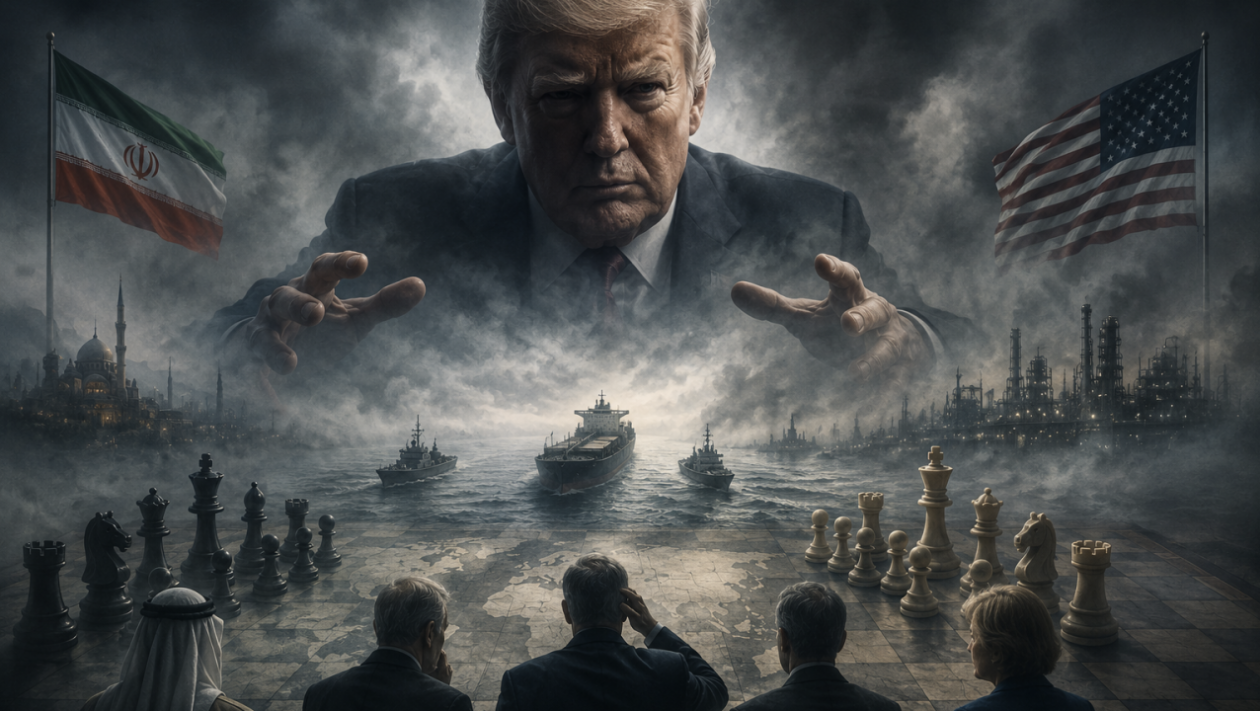

The victory of strategic fog
There are times when geopolitics can no longer be read in official communiqués, but in the uncertainty they produce. The crisis between the United States and Iran has entered this strange zone where no one—neither the military, nor the diplomats, nor the communication experts—is able to tell if we are heading towards a broader war, a peace treaty, a partial surrender or a simple tactical pause.
The lack of clarity is not only a consequence of the crisis. It has become one of its instruments.
Donald Trump has understood one essential thing: in a power struggle, “unpredictability” can become a weapon. It is no longer just a matter of striking, negotiating, or threatening. It is a matter of preventing the opponent from stabilizing his own calculation. Iran no longer knows whether Washington is preparing a diplomatic exit or another wave of pressure. Europeans no longer know whether to condemn, accompany or comment. Financial markets are hesitating between the hypothesis of a détente and that of a major energy shock.
The Strait of Hormuz perfectly illustrates this signal war. On one side, the US and its allies are threatening Iran with sanctions if it does not end its control over the straits. On the other hand, Washington maintains naval pressure while leaving open the possibility of a settlement. It is double message diplomacy: the outstretched hand exists, but it remains behind coercion.
This method confuses European capitals. The media, often obsessed with criticizing American unilateralism, analyze the crisis through an automatic grid: Trump would be dangerous, Israel excessive, Iran problematic but always placed in a context of humiliation, sanctions or regional defense. This reading is not entirely wrong. But it becomes insufficient when it ends up granting Tehran extenuating circumstances that are systematically denied in Washington or Jerusalem.
Because Iran is not a passive actor. He uses Ormuz, militias, the energy threat, the victim narrative and indirect negotiation as tools of power.
The paradox is this: Trump is accused of creating chaos, but this apparent chaos produces a real strategic effect. It forces everyone to react at their own pace. Iran must choose between escalation and economic survival. Europe reveals its impotence. China is watching with concern as an essential energy route becomes a US pressure point. Commentators, for their part, tend to agree: no one really knows what will follow.
But, in this crisis, not knowing is already information. This means that the initiative is no longer collective. It has returned to the one who imposes the tempo. Trump may not yet have won the confrontation with Iran. He may not have obtained peace, surrender or the definitive strategic retreat of the Revolutionary Guards. But he won an essential battle: that of the fog.
In the ancient world, power was about showing strength. In today’s world, it sometimes consists of making one’s next move unreadable. On this score, Trump has achieved what Europeans hate most: he forced them to comment on a game whose rules, timetable, and outcome they do not control.


