


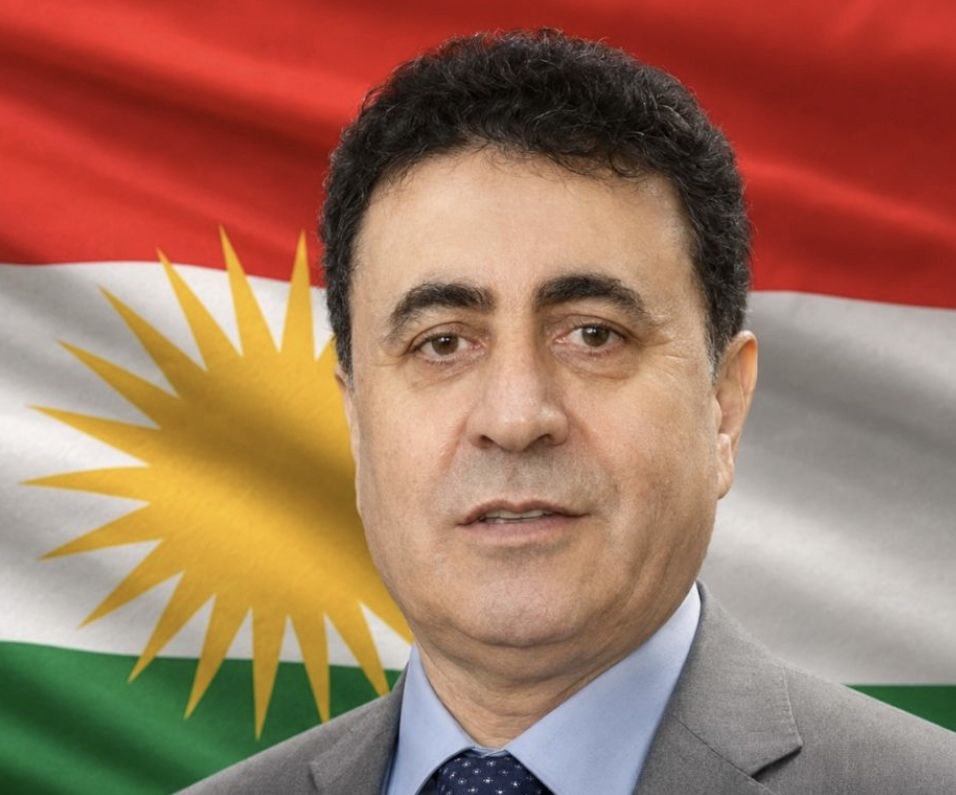

Kurds, Persians, and the National Question in Iran
This article refers to the existence of a geographical region now internationally recognized as Iran. However, historically, this region has been home to several distinct nations and peoples. Despite the lack of consensus among these nations, their territories have been politically integrated over the past hundred years under the name of Iran.
At the same time, a single nation has considered itself the dominant authority over this country and, in practice, the sole heir to the vast historical and geographical heritage of this multiethnic region, referring to other nations simply as ethnic groups or newcomers.
However, examining the history of each of these nations, it becomes clear that this perception does not reflect historical reality. Each of these peoples has lived on their ancestral lands for hundreds and thousands of years and has maintained its own political authority, government, and historical identity.
In particular, the Kurdish nation has had its own political power, and the Median Empire existed in this region before the rise of the Achaemenid Empire. The Kurds are among the peoples with ancient roots in the language, history, and culture of this region. However, throughout history, aspects of this heritage have been appropriated, marginalized, or reinterpreted by others.
Much has already been written and discussed on these historical issues. In this article, however, I will focus on the contemporary struggle of oppressed, non-Persian nations against the current regime of the Islamic Republic of Iran.
Since 1979, following the founding of the Islamic Republic of Iran, the Kurdish nation and other non-Persian nations have expressed their opposition to this authoritarian regime, which has denied freedom and national rights to oppressed peoples. They have engaged in political struggles and movements to demand their fundamental rights.
Similarly, the People’s Mojahedin Organization of Iran (PMOI/MEK), as a nationwide Iranian opposition movement, left Iran two years after the founding of the Islamic Republic and announced its struggle against the regime.
During nearly five decades of uninterrupted fighting, this period has been marked by hundreds of thousands of deaths, millions of displaced people, and countless tragedies and painful events.
Since 2025, discussions about military intervention against Iran and the possible collapse of the regime have intensified among major powers, such as the United States and Israel, and among major international media. As of this writing, several military clashes involving missiles, drones, and naval operations have occurred. The situation has remained poised between conflicts and temporary ceasefires; however, the possibility of regime collapse has become increasingly popular.
Currently, in addition to non-Persian nations, several smaller groups based in Europe and the United States, organized within various Iranian nationalist political movements with a Persian-centric perspective, have proposed themselves as potential alternatives for Iran’s future.
Aside from the People’s Mojahedin Organization of Iran (PMOI/MEK), which has expressed support for some fundamental rights of non-Persian nations, other nationalist movements and political forces centered on Persian culture have largely failed to recognize the national rights of other peoples through their statements and messages. They continue to view this geographic region as belonging to a single nation, a single language, and a single flag.
Such chauvinistic approaches and political messages have become a crucial issue for the future of these nations’ rights. In other words, the future of the national rights of non-Persian nations within the territory currently known as Iran—including Kurds, Azeris, Arabs, Baluchis, Turkmens, Caspian Sea peoples, and other peoples—has become one of the most important contemporary issues requiring in-depth analysis and debate.
In this context, the following concepts will be examined:
Right to self-determination
Nation-state
Multinational federal state
Centralization
Decentralization
A fundamental difference
The fundamental difference is that, for many Persians, the primary concern is the overthrow of the Islamic Republic of Iran and the establishment of a secular and democratic government—presumably under the leadership of the son of the former Shah of Iran—where people would enjoy freedoms such as the freedom to dress and choose their own lifestyle.
However, for the Kurdish nation and other non-Persian nations, this has never been, and still is not, the central issue.
Issues such as freedom of dress, economic hardship, market conditions, daily social restrictions, or even the right to receive an education in one’s native language at primary school level, while important, are secondary concerns for nations boasting thousands of years of history in their ancestral lands and territories.
The central issues for us Kurds and other non-Persian nations are national identity, national rights, national self-governance, and the ability to exercise ownership and authority over our economic resources, wealth, and national assets.
The question is how these rights, recognized in United Nations declarations on human rights and international legal documents, can be realized. This remains a complex and timely issue that requires international actors and advocates for political change in Iran to consider a fundamental and long-term solution for the future rights of these nations.
The discussion should not be limited to the idea that the current regime must first collapse and then establish a provisional authority. Historical experience has shown that such transitional authorities can ultimately turn into another form of dictatorship with respect to the rights of oppressed, non-Persian nations.
A similar pattern occurred during the collapse of the monarchy and the establishment of the Islamic Republic. Ultimately, the gains of the revolution, struggles, and uprisings were sacrificed under a new authoritarian religious regime.
The Right to Self-Determination in International Law
To address these issues, the principles of international law established by the United Nations recognize the concept of self-determination.
Article 55 of the United Nations Charter also supports this principle.
Both major international covenants begin with the same statement:
“All peoples have the right to self-determination.”
The main forms of self-determination include:
Internal self-determination, participation in governance, regional self-government or autonomy, and the preservation of language, culture, and identity.
External self-determination
The establishment of an independent state, or unification with another nation or state.
In addition, numerous other provisions and articles of international law recognize and uphold these rights for oppressed peoples and nations.
By Arif Bawecani
Leader of the Party Serbesti Kurdistan PSK


