


Asia’s Energy Hostage: How Iran’s Hormuz Gamble Turned the Indo-Pacific Against Tehran.
When Iran moved to close the Strait of Hormuz in late February 2026, Western commentators rushed to frame it as round two of the US-Iran standoff. They missed the point. The first countries to take the hit weren’t American. They were Asian.
China, Japan, South Korea, India — all four woke up one morning exposed to a conflict they hadn’t chosen and couldn’t control. For years, Tehran had waved Hormuz around like a trump card against Washington. When it finally played it, the card landed squarely on Asia’s throat.
That’s not a minor miscalculation. That may be the mistake that defines the Islamic Republic’s endgame.
The numbers were never a secret. Japan runs on Middle Eastern crude. So does South Korea. China has spent years diversifying — Russia, Central Asia, alternative routes — but the Gulf still matters. India too. The Strait of Hormuz isn’t just a shipping lane. It’s the artery through which a huge chunk of Asia’s industrial economy breathes.
The United States? Less so. Shale changed everything. Washington still flinches at oil price spikes, but it’s not structurally dependent on Gulf flows anymore. Asia is. That gap has been obvious to anyone paying attention for the better part of a decade.
Which is exactly why Iran’s move was so bewildering. By weaponizing Hormuz, Tehran didn’t squeeze America. It squeezed its own support base.
Maybe Iranian leaders assumed that energy dependency would push Asian capitals to pressure Washington into backing off. That’s not how it played out. Dependency doesn’t breed sympathy — it breeds resentment. And in this case, something worse for Tehran: the creeping sense across Asia that Iran was holding their economies hostage for a fight that wasn’t theirs.
China is the sharpest illustration.
Beijing’s relationship with Tehran was always transactional, not ideological. Discounted oil, Gulf leverage, a useful foil for anti-Western posturing — Iran ticked useful boxes. The 2021 cooperation agreement made sense in that logic. But after Hormuz, Beijing wasn’t being asked to protect a diplomatic ally. It was being asked to absorb real damage to its own energy security on behalf of a partner whose judgment had just become a liability.
Those are different asks. Energy security in China isn’t a policy debate. It’s the thread connecting industrial output, social stability, and the Party’s legitimacy. Pull it hard enough and you’re not talking about diplomacy anymore.
The timing was brutal. With major US-China contacts approaching, Beijing found itself squeezed: back Tehran and look complicit in destabilizing the world’s most critical maritime route, or distance itself and undercut years of carefully built anti-Western positioning. Neither exit was clean.
China’s first public reaction was muted. That silence wasn’t ambiguity. It was the sound of a strategic partnership turning into a burden.
Japan and South Korea came at it from a different angle but landed in roughly the same place.
Both are US treaty allies. Both have spent years defending the idea that maritime space isn’t a coercive tool — primarily because they’ve watched China test exactly that principle in East Asia. They didn’t need a briefing to recognize what Iran was doing. Closing a major international waterway to impose political will is the same logic, different address.
So Iran became readable to Asia in the worst possible way — not as a sanctions-battered country pushing back, but as a state willing to treat a global commons as a pressure lever. Public statements stayed cautious. But caution isn’t indifference. The conclusions were being drawn in quieter rooms.
Here’s the irony Washington will remember.
At the start of the US campaign against Iran’s military and nuclear infrastructure, the coalition problem was real. Europe dragged its feet. NATO stayed on the sidelines. A lot of governments were queasy about the optics of another US military operation in the Middle East. The legitimacy question was open.
Then Iran hit Hormuz and started solving Washington’s problem for it.
Freedom of navigation isn’t just American rhetoric. It’s the legal and practical foundation of global maritime trade. The moment Tehran moved against it, the conflict stopped looking bilateral. It became a challenge to the whole system — and that reframing mattered. India’s maritime coordination, Japan’s discreet backing, South Korea’s contingency moves: none of it added up to a formal coalition against Iran. But the direction was unmistakable. Asia’s major powers were not rallying to Tehran’s flag. They were quietly stepping back.
That’s the long-term damage, and it’s severe.
Iran spent years cultivating Asian relationships precisely because Asia offered what the West wouldn’t: trade, investment, and a working pragmatism that asked no ideological questions. What Asia asked for, above all, was predictability. Hormuz shattered that. It showed that Iran would sacrifice Asian energy security the moment its own confrontation with Washington required it.
That’s not what partners do. That’s what liabilities do.
Tehran thought closing the strait would raise the cost of confronting Iran. It did. But it raised the cost of staying close to Iran even more. That’s the kind of strategic own goal that tends to be permanent.
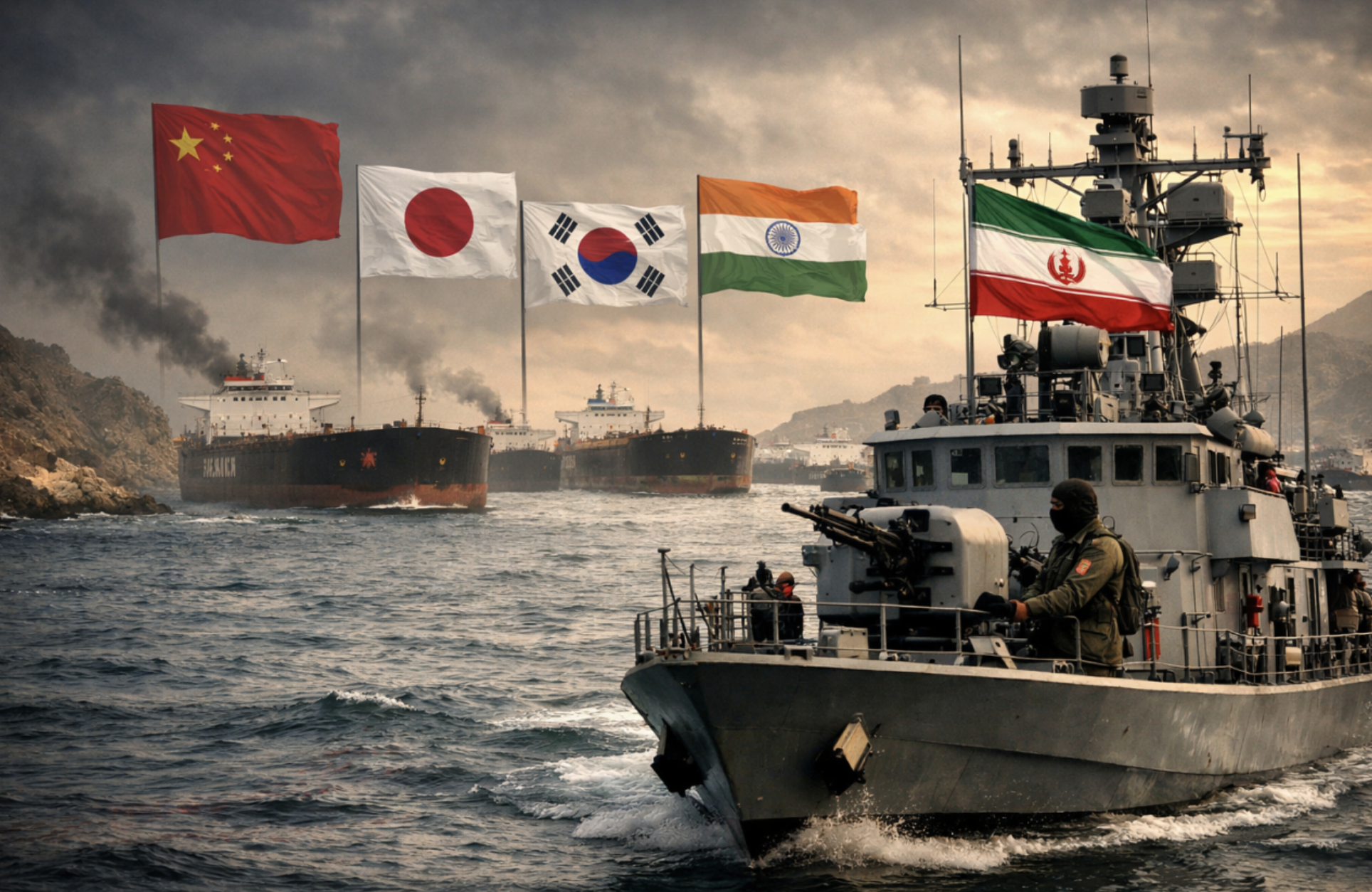
Middle-East: Asia’s Energy Hostage
How Iran’s Hormuz Gamble Turned the Indo-Pacific Against Tehran
21/03/2026 1:16 PM 


