


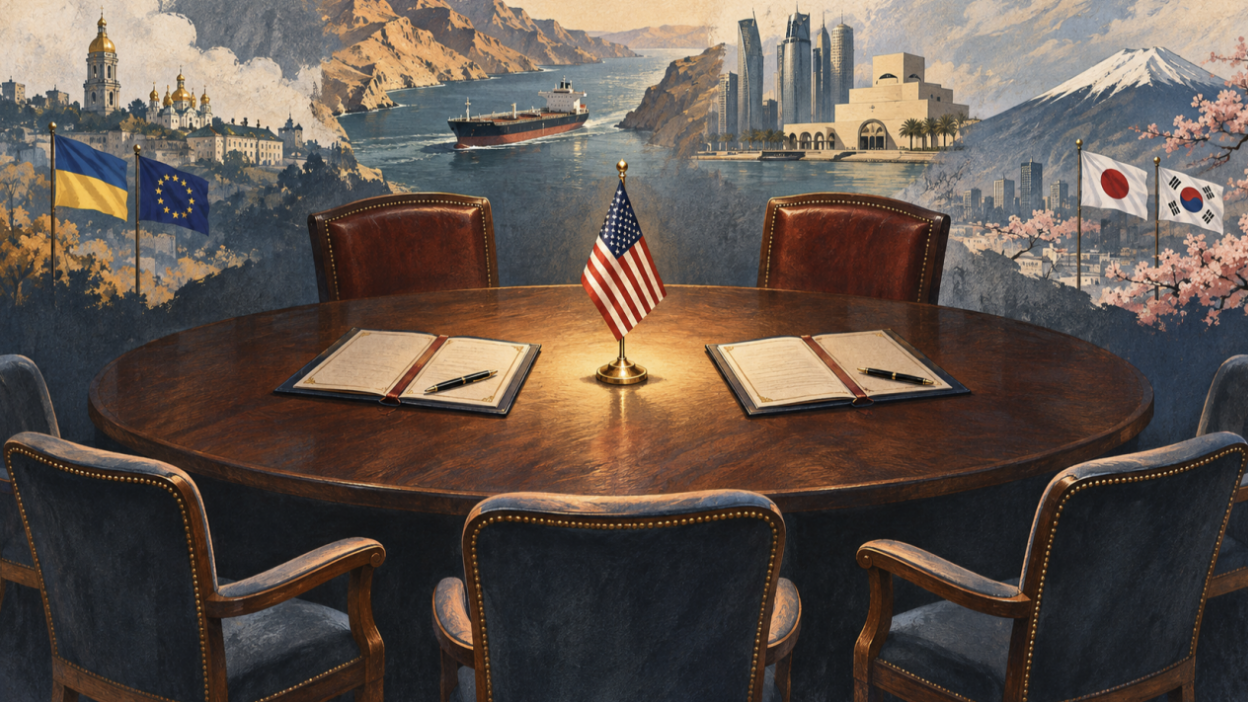

From Abu Dhabi to Hormuz. Can Washington keep its three lines
On November 10, the United States brought Russian and Ukrainian delegations together in Abu Dhabi. First time since February. The day before, Washington rejected some of Iran’s conditions for resuming talks. But it also left the door open for Qatar to mediate. Different goals.Same question for allies.
What role will they play in choices that affect their own security?
How far will compromise with Moscow go?
Washington wants talks. A verifiable truce would cut Ukrainian losses and lower the risk of escalation in Europe. It would also give U.S. diplomacy more room in the Middle East and Asia.
But what gets agreed matters as much as signing anything. Prisoner swaps or monitoring a ceasefire could calm things. A deal that limits Ukraine’s defense options or NATO’s presence in eastern Europe would shift the balance of power for years.
That is where European trust matters. Reuters says several Europeans sent reps to Abu Dhabi even though Moscow opposed their taking part. Europeans are directly affected by security guarantees, reconstruction funding, and decisions on sanctions. Being told about a deal and helping shape it are not the same. The longer Washington waits to bring them in, the harder it will be to make the deal they want work.
With Tehran, pressure has to force a choice
Iran especially wants the U.S. to lift sanctions and end the blockade before talks restart. Washington wants to talk nuclear issues from the start. The fight is as much about who moves first as about the content of any deal. Each side wants the other to go first. Until that gets sorted, more pressure mostly raises the cost of waiting and does not pull the sides closer.
One way through is to use Qatar as a mediator for limited, verifiable steps. Gradually reopen shipping through Hormuz. Lift some restrictions selectively and in ways that can be reversed. That gives both sides a reason to move while keeping nuclear talks open.
Time matters. The longer shipping is disrupted, the more pressure it puts on Iran’s energy importers. For Japan and South Korea, the price they pay shows up in energy costs and in the security of their supplies.
In Asia, allies will watch resources as well as promises
A truce in Ukraine would be welcome in Tokyo and Seoul if it frees up U.S. resources and lowers the chance of crises happening at once. But a long fight with Iran could eat that margin. Air defense and naval forces as well as ammunition stocks are needed in several places.
For Asian allies, the question is simple and concrete. If a crisis breaks out in their region, what forces will Washington actually have available, and how fast can it send them? U.S.-Japan public commitments give some answers. Credibility is something tested over time.
Tokyo and Seoul will also watch how Washington treats Kyiv and the Europeans. Ukraine and Japan have different relationships with the U.S. But Asian partners may worry about the precedent. If Washington asks others to bear the costs of a deal made without them, they will wonder how much influence they would have over an urgent U.S. decision about China or North Korea.
The cost of a quick deal
Washington can try to chase all three goals at once. A truce Kyiv accepts, guarantees worked out with Europeans, and gradual calm in Hormuz could even reinforce each other.
The risk is if the White House buys time on one front by shifting costs to others. A concession to Moscow could transfer risk to Europe. Prolonged pressure on Iran could put part of the bill on Asia.
The real test comes after the first announcements. Who was involved in the decision? Who can ensure the agreement is followed? Who must act if it is violated? Allies will judge U.S. policy by those answers.


