



Strait of Hormuz: masterstroke or strategic Trap
The idea of a U.S. naval blockade of Hormuz is no longer just a far-off thought since the American-Iranian conflict started on February 28, 2026. It is now a real option for strategy. But in geopolitics, an option on paper almost always has effects that are not neutral.
What Washington could get
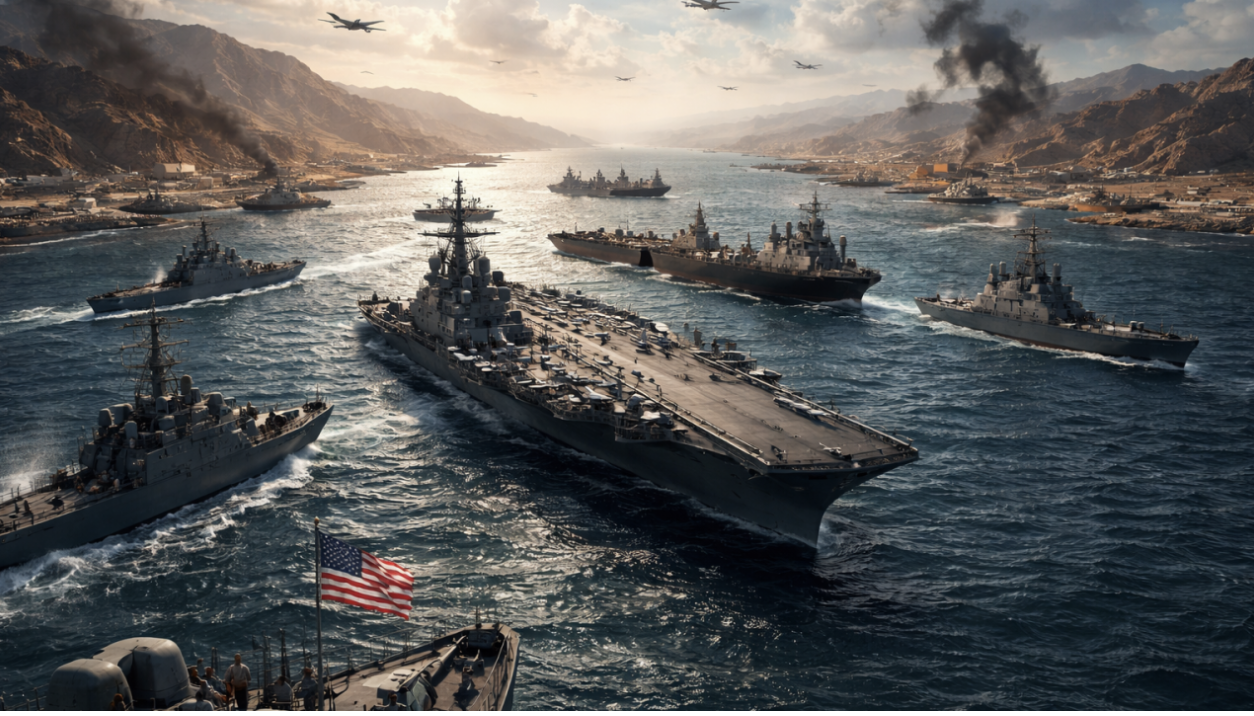
It’s easy to understand American logic. A blockade would first target Iran’s economic lifeline by cutting off oil exports, which would take away money from the regime and remind Tehran that the cost of confrontation could become too high. The United States has the military resources to do so. The United States has a huge naval advantage in the Gulf, and the Fifth Fleet in Bahrain gives Washington the ability to limit or deny passage, at least in some cases.
There is also a psychological and diplomatic side to it. A declared blockade, even if only partially, would put more pressure on Tehran and the regime’s networks in the region right away. It would send a clear message: Washington is ready to go from deterrence to direct force. In Trump’s political language, pressure and negotiation are not the same thing. It is often the thing that needs to happen first. From that point of view, Hormuz could be used not as a goal in itself, but as a way to make Iran come back to the table under worse conditions.
In theory, there is an even more tempting scenario for Washington: not a complete closure of the strait, but a targeted disruption that mostly affects Iranian exports. In other words, punish Tehran without completely cutting off support for Gulf partners. A kind of controlled maritime force. It looks right on paper. Almost like surgery.
What Washington might lose
Hormuz is not an American border. It is a waterway that goes between countries. Any unilateral blockade, even if it is meant to protect maritime security, would quickly lead to legal and diplomatic problems. It would also show that there are problems within the Western camp. Europe is already unsure and split on how to deal with Tehran, so it would not be very interested in supporting such a move.
Iran doesn’t have to beat the U.S. Navy to make a blockade expensive, which is more important. Tehran’s asymmetric doctrine has long been based on this kind of situation: mining the strait, threatening Gulf energy infrastructure, targeting key terminals like Ras Tanura, and using proxy pressure from Yemen to Lebanon. Washington can try to take over Hormuz. Iran can try to make it hard for everyone to deal with.
And then there is the oil shock. A $150 barrel wouldn’t just hurt Iran. It would hurt the world economy, shake up allied countries, and send a political shockwave back to the United States. Strategic coercion can quickly turn into strategic self-punishment.
China, the quiet center of power
This is when the problem gets even worse. China still relies heavily on energy that comes through Hormuz. So, a U.S. blockade against Iran would have a direct effect on Beijing, even if Washington doesn’t mean for it to. This is not a side effect. It could be the most important geopolitical effect of the whole thing.
For China, the problem would be very bad. If you protest diplomatically without doing anything, you are showing that you are weak in public. Beijing doesn’t want to start a fight with Washington right now, so supporting Iran too openly would put them at risk. But if they do nothing, they will also be setting a dangerous precedent: the US can threaten a large part of China’s energy security on its own.
Beijing would probably respond on several levels at once: putting pressure on the UN, speeding up the development of alternative energy routes, quietly helping Tehran economically, and sending carefully planned military signals to other parts of the world, especially East Asia. In other words, a crisis in Hormuz wouldn’t stay in the Gulf for long.
On paper, an American blockade of Hormuz is possible from a military point of view and tempting from a strategic point of view. In 2026, this is a double-edged move that Washington can’t keep up without paying the price on two fronts at the same time: the global economy and the relationship between the US and China. The real question is not “Can Hormuz be blocked?” but “Can Washington handle everything that a blockade starts?” The Strait of Hormuz is not just Iran’s tap. It is the world’s thermometer. The person who closes it is responsible for everything that happens after that.


